




Migrating involves cultural, work and also financial adaptation.
La financial education for migrants is key to achieving stability in a new country without neglecting financial support for your family.
According to the World Bank, migrants send hundreds of billions in remittances to their countries of origin every year, becoming an economic pillar for millions of households. However, many people lose money due to lack of planning, high fees, or ignorance of the exchange rate.
In this guide, you'll learn the basic concepts that really matter and how to apply them to your daily life.
Index of contents
- Why is financial education key for migrants?
- Basic financial concepts you should know
- How to make a realistic budget in a new country
- The impact of the exchange rate on your money transfers
- Statistics that every migrant should know
- Common financial mistakes when migrating
- Digital tools that can help you
- Conclusion
Why is financial education key for migrants?
When you arrive in a new country, the rules of the game change completely:
- New banking system
- Different cost of living
- Different taxes
- Different currency
- New credit rules
Without basic knowledge it's easy to:
- Get into debt quickly.
- Paying unnecessary fees.
- Sending money at unfavorable times.
- Don't build your own savings.
Financial education isn't just about saving. It's about making informed decisions.
Basic financial concepts you should know
1. Monthly budget
A budget lets you know exactly:
- How much you earn.
- How much you spend.
- How much you can save.
- How much you can allocate to money transfers.
Without a budget there is no financial control.
2. Emergency fund
Ideally, you should have saved the equivalent of 3 months of basic expenses.
Many migrants send money constantly but do not build their own support, which creates vulnerability to unforeseen events.
3. Exchange rate
The exchange rate determines how much your family receives in their local currency.
Small variations can make significant differences if you send money every month.
Reviewing the exchange rate before confirming a shipment can make a difference.
4. Real commissions
According to data from the World Bank, the global average cost of sending money internationally is around several percentage points of the amount sent.
That means that, in the long run, you could be losing a significant amount if you don't compare options.
How to make a realistic budget in a new country
A rule of thumb can divide your income into three parts:
- Essential expenses (housing, food, transportation).
- Savings and emergency fund.
- Money transfers and personal goals.
The common mistake is sending money first and managing what's left later.
The right strategy is to plan shipping within the monthly budget.
The impact of the exchange rate on your money transfers
In contexts of economic crisis or global instability, the exchange rate can fluctuate rapidly.
This can cause:
- That your family gets less money.
- That the actual cost of shipping is higher.
- That you miss opportunities to send at favorable times.
That's why it's important to use tools that show the exchange rate in real time before confirming the trade.
Statistics that every migrant should know
Incorporating data strengthens decision-making.
Some relevant data:
- Money transfers represent a key source of income for millions of households in developing countries.
- In many countries, money transfers exceed foreign direct investment.
- Global commissions continue to be a priority issue in international economic policies.
This shows that sending money is not an isolated act, but part of a global economic system.
Common financial mistakes when migrating
Many migrants repeat these mistakes:
- Do not keep records of expenses.
- Use shipping services without comparing fees
- Do not consider the exchange rate before sending.
- Don't build your own savings.
- Rely solely on cash.
Financial education makes it possible to avoid these patterns.
Digital tools that can help you
Today, there are digital solutions that make it easier to manage money and send internationally.
Modern platforms allow:
- View the exchange rate before confirming.
- Know the total cost of shipping.
- Track in real time.
- Perform operations without physical movement.
In this context, integrating digital tools into your financial planning is key.
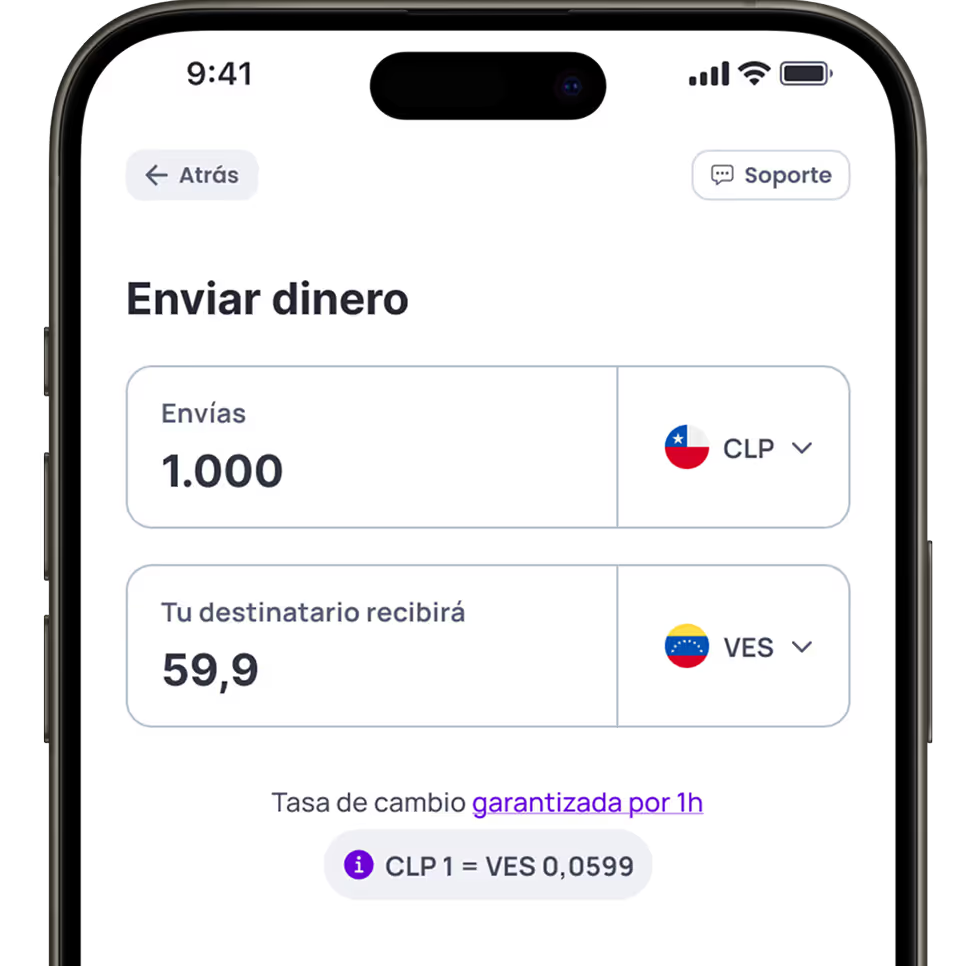
For example, Retorna is a money transfer app that allows you to make international transfers by clearly showing the exchange rate and the total cost before confirming.
Using transparent digital platforms can help you make more informed decisions aligned with your financial strategy.
You can learn more at:
Conclusion
La financial education for migrants it is an empowerment tool.
Understanding concepts such as budget, exchange rate, commissions and strategic savings allows you to:
- Build stability in the country where you live.
- Maximize the value of your money transfers.
- Reduce financial risks.
- Plan your future with greater security.
The combination of financial knowledge and the right digital tools can make a real difference to your economic well-being.

Your money arrives in a heartbeat
With Retorna, your transfers arrive in minutes. It's as easy as sending a WhatsApp message. Send money in just a few clicks—fast, secure, and hassle-free.

Escanea el código y empieza a enviar dinero a tus seres queridos en cualquier parte del mundo.
Disponible en