


Did you know that every month, millions of Latin Americans living abroad send money to their families? International money transfers are more than just a financial transaction: they are a form of love, responsibility, and connection to home. But how often do they do it? How much do they send? And which months see the highest volume of these efforts?
In this article, we share what the data says about remittance habits in Latin America.
How often are remittances sent?
According to data from the World Bank and the IDB, the majority of Latin American migrants send money home at least once a month. In corridors like Chile→Venezuela or Spain→Colombia, many send money two or even three times a month, depending on their income and the needs of the household back home.
The most common patterns are:
- Monthly (once a month): the most frequent, usually coinciding with the migrant's payday.
- Bi-weekly (twice a month): common among those who receive their salary every 15 days.
- Occasional for special dates: Christmas, Mother's Day, the start of the school year, and birthdays see additional spikes in transfers.
How much money is sent on average?
The average amount per transfer varies significantly depending on the country of origin and destination, but in Latin America, it is estimated that the average transfer ranges between 150 and 350 dollars per transaction.
The interesting thing is that although the individual amount may seem modest, the total volume is enormous: Latin America and the Caribbean received more than 155 billion dollars in remittances in 2023, according to the World Bank, solidifying its position as the region with the highest growth in remittance flows globally.
The months with the highest remittance volume
Not all months are the same. Data shows clear peaks in transfers during:
MonthMain reasonMayMother's Day (the highest of the year in many corridors)DecemberHoliday season and ChristmasMarchBack-to-school season in Southern Hemisphere countriesAugustBack-to-school season in Northern Hemisphere countries
May, in particular, is special. Mother's Day carries immense emotional weight for Latin American families, and migrants express this through more frequent transfers and higher amounts than at any other time of the year.
Why is getting it right so important?
Every transfer has a cost. Commissions, unfavorable exchange rates, and hidden fees can eat up between 3% and 8% of the money you send. If you send 200 dollars with a 5% commission, your family receives 190 instead of 200.
Multiplied by 12 transfers a year, that is over 120 dollars lost to unnecessary costs.
That is why choosing the right platform matters. With Retorna, the exchange rate is transparent before you send, and there are no hidden fees.
The real impact of remittances on families
Remittances are not just money: for many families, they represent more than 50% of household income. They are used to pay for rent, utilities, children's education, and healthcare. In countries like Venezuela, El Salvador, or Honduras, remittances are a fundamental pillar of the domestic economy.
Every time a migrant sends money, they aren't just meeting a need: they are supporting a family's life project.
Conclusion
Latin American migrants send money home with surprising frequency and consistency. May is the peak month, driven by Mother's Day. Every cent counts, which is why choosing a reliable, fast platform with no hidden fees makes all the difference.
If you want your next transfer to arrive in full and on time, Retorna is available in over 30 countries.
🔗 Internal link building
Want to better understand what a remittance is and how it impacts families? Read this article: The power of remittances: how they boost families and global economies
Looking for strategies to save on every transfer? Check out: Strategies for saving on international transfers
❓ Frequently Asked Questions (SEO FAQ)
How often do Latin American migrants send money home?
Most Latin American migrants send money at least once a month, usually coinciding with payday. Many send money twice a month or more if their income allows.
How much money do migrants send on average per transaction?
The average transfer amount in Latin America ranges between $150 and $350, though it can be higher during special occasions like Mother's Day or Christmas.
Which month has the highest volume of remittances in Latin America?
May is the peak month for remittance transfers in most Latin American corridors, driven by Mother's Day. December is the second most important month.
How much money does Latin America receive in remittances annually?
According to the World Bank, Latin America and the Caribbean received over $155 billion in remittances in 2023, making it the region with the highest growth in remittance flows globally.
What percentage of family income do remittances represent?
For many Latin American families, remittances account for more than 50% of household income. They are primarily used for food, housing, education, and healthcare.
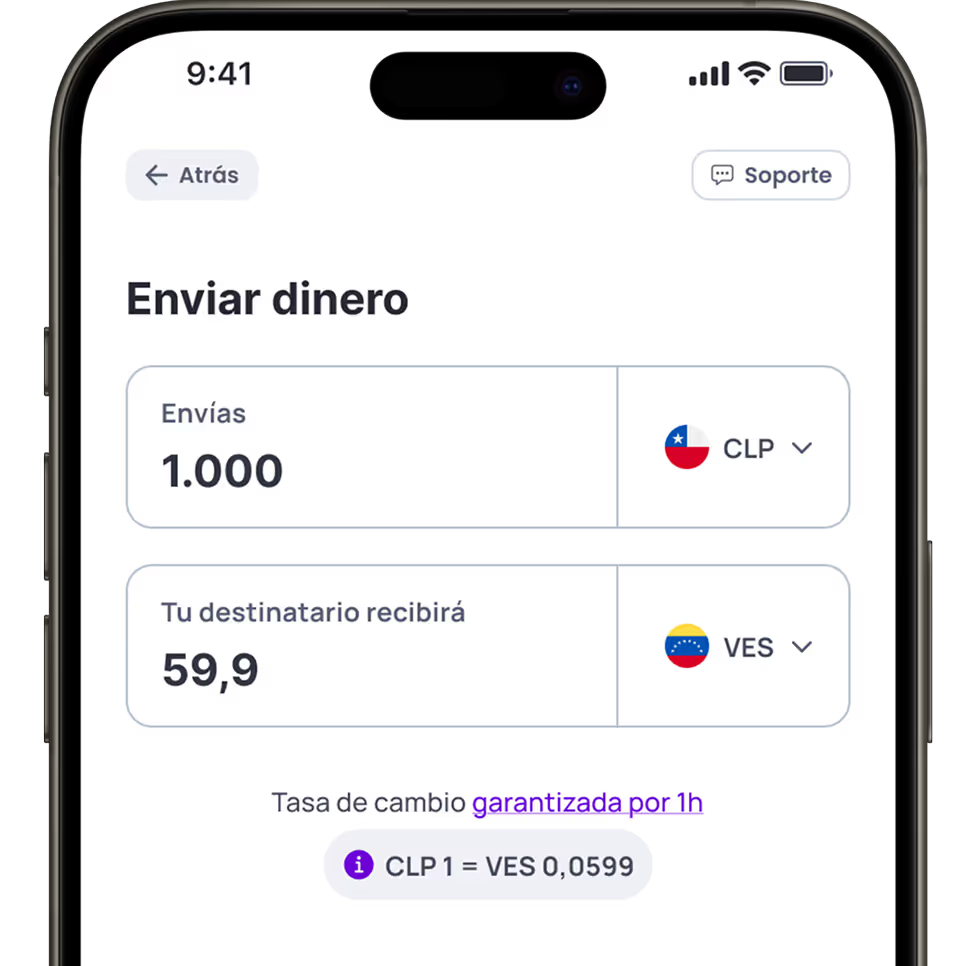

Your money arrives in a heartbeat
With Retorna, your transfers arrive in minutes. It's as easy as sending a WhatsApp message. Send money in just a few clicks—fast, secure, and hassle-free.